DeWitt slab leveling
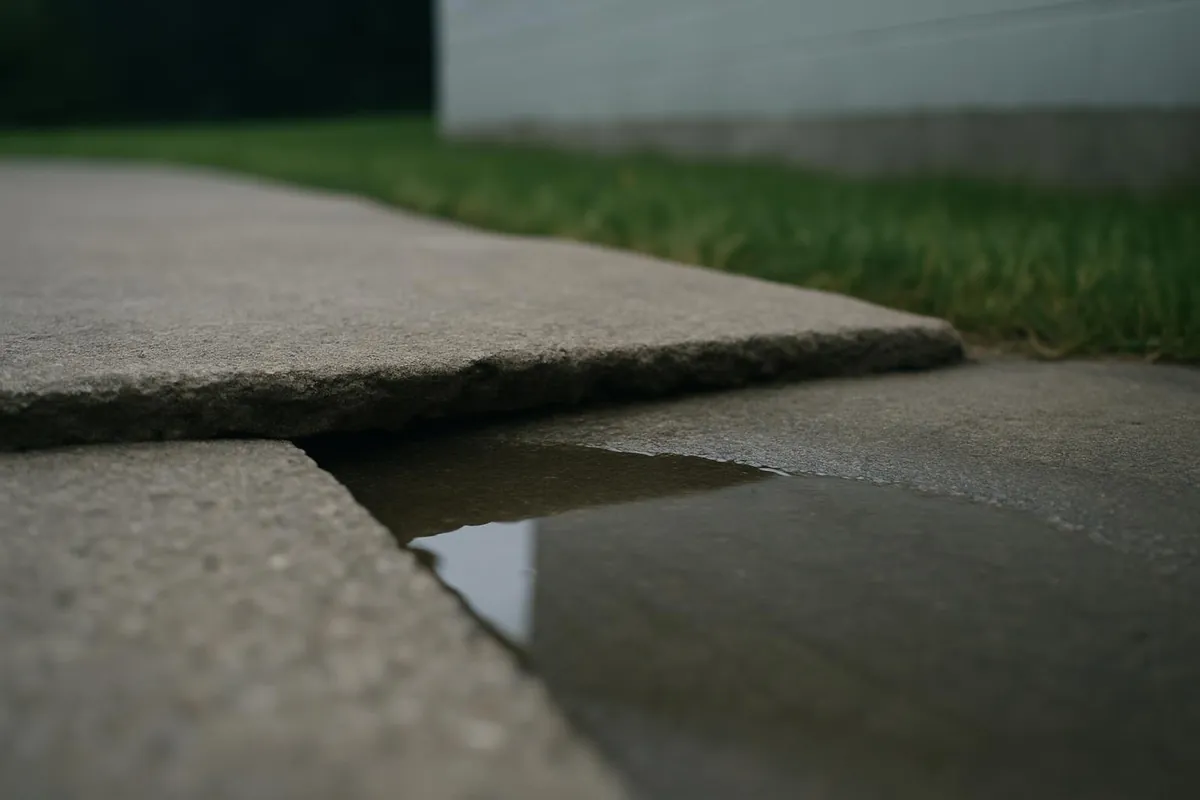
One slab has sunk in DeWitt and you trip on the edge: lift it or replace it?
A slab at your DeWitt house has dropped below its neighbor, and the uneven edge is a hazard in daylight and worse in the dark. Tell us where it sank, and we introduce a local contractor to say whether it can be lifted.
Sunken slab on your list? Taking $100 off your first job happens when the lift is booked.
From the house to the street
- Garage floorYours
- Steps and walksYours
- DrivewayYours
- ApronYours, with a permit
- Public sidewalkOwner (Town of DeWitt)
- StreetRoad owner
This fits when
Signs it is time for slab leveling work
One panel sits lower than the next
Measure the drop with a ruler and photograph it. A contractor can tell more from a number than from a description.
A walk tilts toward the house
Water tilting toward the foundation matters more than the trip hazard. Say so when you ask.
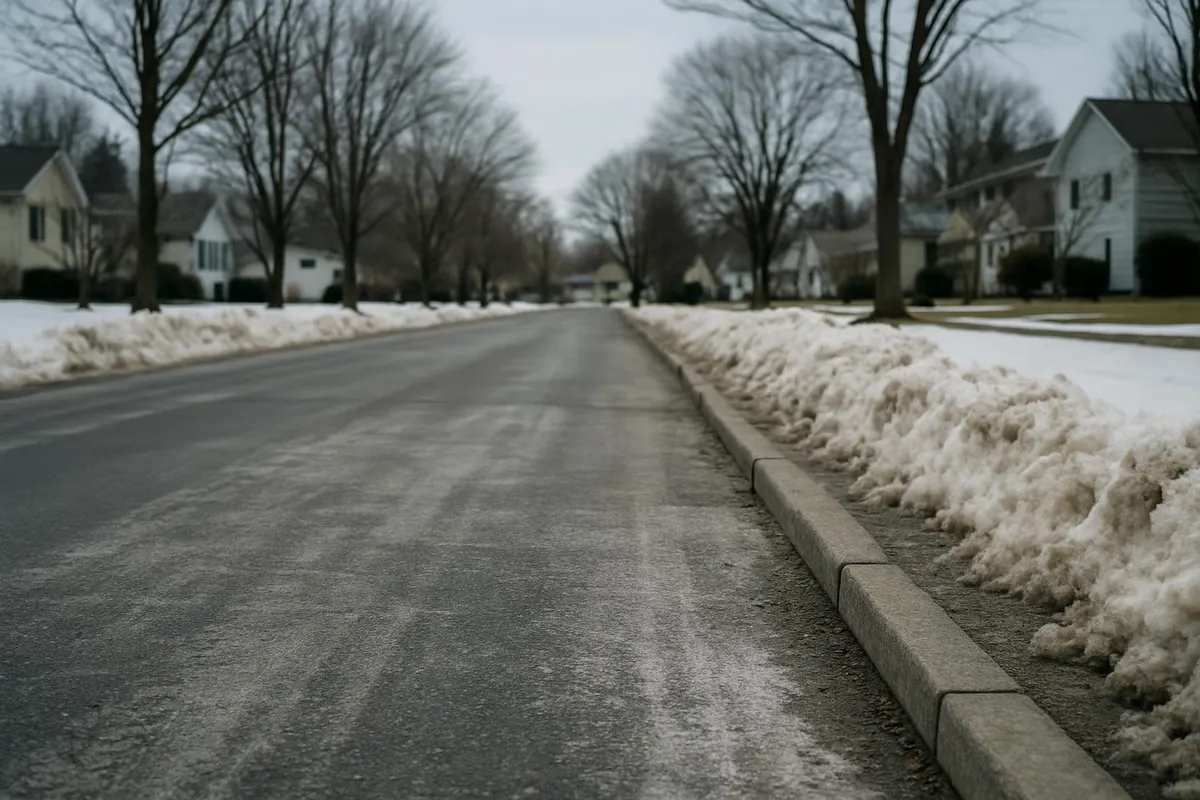
The slab at the street end has settled
Check who owns the road first. The street end of a drive can be the road owner's to approve.
Cracks open at the joints and the base shows
Where the base is washed out or missing, lifting may not hold. Ask what is under the slab.
Questions
Before you book slab leveling work in DeWitt
- 1
Can every sunken slab in DeWitt be lifted?
No. Whether a lift is worth it depends on what is under the slab and how sound the concrete is. Ask the contractor to say why a lift will or will not hold.
- 2
What should I send a contractor about a sunken slab?
Send the measured drop, photos of the low corner and the nearest downspout, and a note about any digging nearby.
- 3
What is D-cracking?
NRMCA describes D-cracking as cracking that starts at joints at the bottom of an outdoor slab and appears later. Ask whether your joints show it before you pay to lift the slab.
- 4
Who decides if the sunken slab is at the street?
The road owner may need to approve it. Ask the town Highway Department which office owns your road.
Ask about your slab
Send us your DeWitt address
Send the details once. Nothing is booked and you owe nothing for asking.
We help you work out whose concrete it is and what to ask for, then introduce you to an independent Syracuse-area contractor to quote it.
Put it in writing before anyone pours
Seven questions for any contractor, any slab. Copy them into your messages and keep the answers with your contract.
- Air-entrained mix, with the air content namedThe mix decides whether the surface flakes again in a few winters.
- The pour date, and a plan if it turns coldCold nights after the pour count, even when the pour day is mild.
- How the slab is cured and coveredCuring and cold protection run for different lengths of time.
- No de-icer on the new slab this winterClean sand gives traction without feeding the scaling.
- Whose road it is, and who pulls the permitWork in a county road right of way needs a county permit first.
- A signed written contract before work startsNew York asks for a written contract on home improvement jobs over $500.
- What is removed, what is poured, what is leftA clear scope stops arguments about patching versus replacing.
$100 off your first job
Your $100 comes off once your first concrete job is booked.
- The credit comes from us, not out of the contractor's price.
- One credit per customer, per property.
- Your job needs to be booked by December 31, 2026.
- Mention the $100 when you book the work.
The straight-answer slab promise
- No charge to ask, and no obligation once you have.
- If the city or the road owner should fix it, we say so.
- We ask about the mix and the pour month up front.
- Your $100 is applied the way our Terms spell out.
Your contract is with the contractor, who answers to you for the work.
Concrete Repair Syracuse, (315) 640-3590
Ask what is under the slab before you ask what it costs
Slabs sink because something under them moved or washed away. Ask the contractor what is under yours, where the water goes when it rains, and whether the cause has been stopped. A lift that ignores the cause can drop again.
Plan to send photos of the downspouts, the low corner and the slab edge, taken in daylight. Mention any recent digging near the slab, such as a utility trench or a new drain. Those details change the answer.
Put the mix in writing.
Ask the contractor how the lift will be checked afterward. A good answer names a recheck after a few wet weeks, not only a look on the day the job ends.
Basis: NRMCA U.S. Census Bureau
A crack that is nothing, and one that is not
NRMCA says most early random cracks rarely shorten a slab's life. D-cracking is one of the two exceptions. It starts at the joints at the bottom of the slab and shows up later.
Start with the street and the slab.
If your sunken slab has cracked, crumbling joints, ask whether replacing it is the better call. Lifting a slab that is breaking up from below may only move the problem.
Take a close photo of each joint beside the sunken slab, with a coin in the frame for size. The contractor can tell a clean joint from a crumbling one in a picture, and that decides how much of the slab is worth saving.
Basis: New York State DOT
When the slab sits at the road
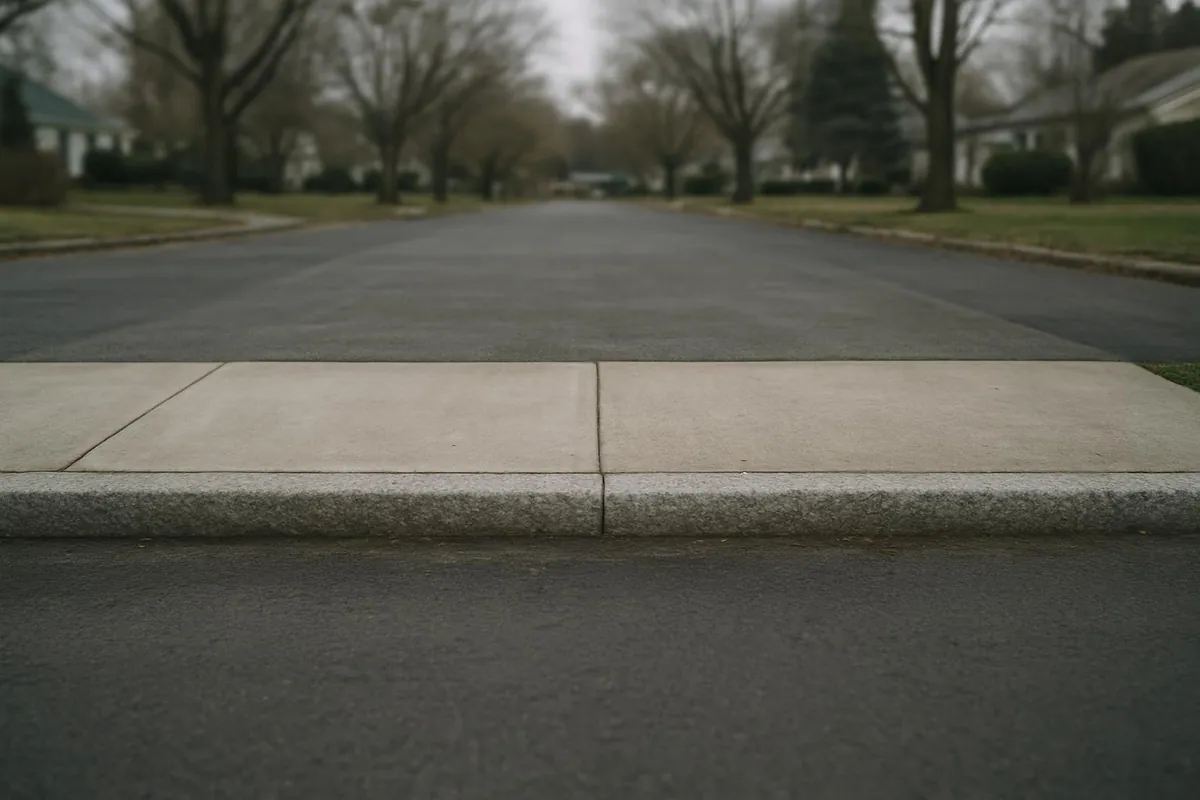
DeWitt streets belong to the town, the county or the state. If the sunken slab is the apron at the street, the road owner may have a say in the work. Find out which office that is before you book.
If the slab is on your own lot, you decide. Ask the contractor to state how the lift is done, how long you stay off the slab, and what happens if it sinks again.
Check whose job it is.
Compare the lift quote with a replacement quote for the same slab. A lift is the cheaper-sounding job only when the slab is sound, so ask both questions of the same contractor and read the answers side by side.
Start with the address and what you see.
Same address
What else your DeWitt lot may need
Close by
Where else this job runs
Know whose slab it is, then pick the month.